
Immersive experience ROI benchmarks are the quantified performance standards that determine whether VR, AR, and XR investments deliver measurable financial returns across training, marketing, and operations. The industry term for this discipline is XR performance measurement, and the benchmarks it produces are now specific enough to inform capital allocation decisions. Forrester research shows enterprise VR training returns an average 219% ROI over three years. That figure, drawn from a 10,000-employee deployment generating $6.1M in benefits against $1.9M in cost, sets the baseline expectation for any serious program evaluation. Companies like Walmart, Fujitsu, and GE Aerospace have since added operational data that extends these benchmarks well beyond training into marketing and assembly efficiency.
1. what are the top immersive training ROI benchmarks?
Enterprise immersive training ROI is measured across four primary dimensions: speed, retention, cost efficiency, and business impact. Each dimension produces a distinct benchmark that finance teams can validate against pre-program baselines.
Speed. VR training achieves 3x to 4x faster learning speeds compared to classroom instruction. Walmart's Pickup Tower onboarding dropped from 8 hours to 15 minutes using VR. That 96% reduction in training time converts directly into labor cost savings and faster time-to-productivity for new hires.
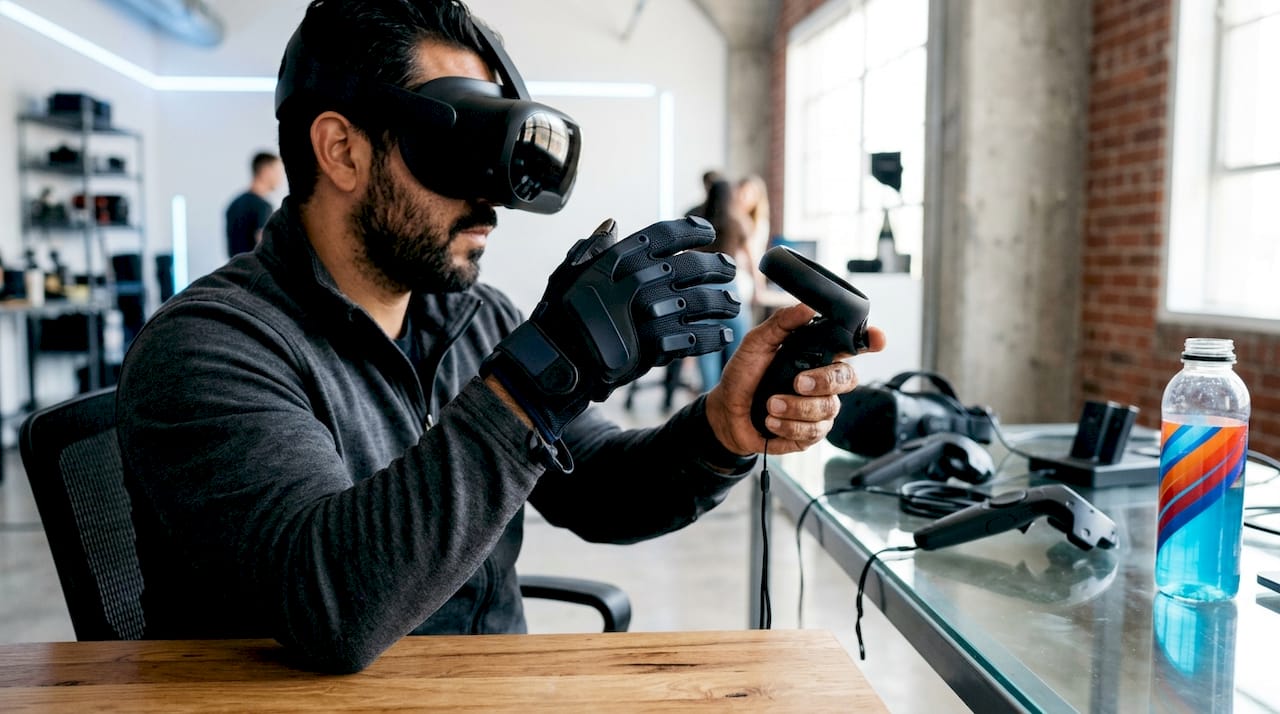
Retention. Immersive learning produces retention rates of 75% versus roughly 10% for traditional classroom formats. Higher retention means fewer repeat training cycles, lower remediation costs, and faster competency attainment at the individual level.
Cost efficiency. At scale, VR training costs 52% less than classroom delivery for cohorts of 3,000 learners. The cost advantage grows as deployment size increases, which makes the economics particularly compelling for large enterprises.
Business impact. Walmart's VR program increased employee satisfaction by 30%, test scores by up to 10%, and retention by 10%. Boeing and similar manufacturers track error reduction rates and onboarding speed as primary financial proxies for training ROI.
Pro Tip: Collect at least 90 days of pre-training performance data before launching any immersive program. Without that baseline, efficiency gains are routinely dismissed by finance as noise rather than program outcomes.
2. how does immersive marketing ROI compare to traditional advertising?
Immersive marketing ROI benchmarks consistently outperform static and standard digital formats across conversion, engagement, and ad spend efficiency. The gap is large enough to be strategically significant rather than marginal.
DTC brands using AR and 360-degree content report a 612% increase in ROAS compared to static ad creative. AR product demos convert at 4.8x the rate of traditional formats. These figures reflect the attention and interaction depth that immersive formats generate, which static imagery cannot replicate.
Experiential and immersive events also outperform standard digital advertising at the campaign level. Experiential events achieve a 38% success rate compared to 19.7% for digital ads. Average event marketing ROI sits between 25–34%, and immersive formats regularly double that baseline.
| Channel | Conversion Benchmark | ROI Range |
|---|---|---|
| Static digital ads | Baseline | 19.7% success rate |
| Experiential events | 1.9x static | 25–34% average ROI |
| AR product demos | 4.8x static | 612% ROAS uplift |
| Immersive VR brand events | 2x+ digital | Exceeds event average |
Pro Tip: Map every immersive marketing KPI to a downstream business outcome. Dwell time and social shares are useful signals, but conversion rate and net promoter score are what CFOs and CMOs will act on.
3. what operational ROI benchmarks do immersive applications deliver?
Operational ROI from immersive technology is most clearly demonstrated in maintenance, assembly, and quality control contexts. The benchmarks here are expressed in time savings, error rates, and cost avoidance rather than learning metrics.
AR in retail reduces product returns by 36% in fashion categories. That figure translates directly into reverse logistics cost savings, reduced restocking labor, and improved customer lifetime value. For a mid-size retailer processing thousands of returns monthly, the financial impact is material.
In industrial settings, assembly time reductions of 19–40% are well documented. Fujitsu cut average assembly time from 120 to 97 minutes using AR-guided workflows. GE Aerospace achieved 20–40% reductions in training time for complex assembly procedures. Both cases demonstrate that immersive guidance reduces cognitive load, which in turn reduces errors and rework.
Key operational benchmarks to track include:
- Mean Time to Repair (MTTR): A direct financial proxy for maintenance efficiency gains from AR-assisted troubleshooting.
- First-time fix rate: Measures whether technicians resolve issues correctly on the first attempt, reducing repeat dispatch costs.
- Assembly error rate: Tracks defect frequency before and after immersive guidance implementation.
- Training time per certification: Quantifies speed gains for compliance-critical skill acquisition.
Finance teams prefer hard operational data like downtime avoidance and quality logs over engagement metrics. MTTR and first-time fix rate provide the credible financial proxies that operational ROI cases require.
4. how do ROI economics scale with immersive deployments?
Scaling immersive programs fundamentally changes the cost structure. The per-learner economics improve steeply as deployment size grows, which makes scale a primary driver of total program ROI.
- Below 375 learners: VR training costs more per learner than classroom delivery. Hardware amortization and content development costs dominate at small cohort sizes.
- At 3,000 learners: VR training becomes 52% cheaper than classroom methods. Travel elimination, instructor time reduction, and facility cost avoidance drive the crossover.
- At 10,000 learners: VR training costs 64% less than traditional delivery. The marginal cost per additional learner approaches near zero once content and infrastructure are in place.
- Total cost accounting: Accurate ROI modeling must include travel, instructor salaries, facility downtime, and lost productivity during training. These hidden costs frequently make classroom training 2x to 3x more expensive than the direct training budget suggests.
- Walmart and Bank of America both demonstrate that large-scale VR deployments generate compounding returns. Walmart deployed VR across more than 4,700 US stores. The per-store cost dropped significantly as the program scaled, while consistency of training outcomes improved.
CFO skepticism about immersive ROI is almost always rooted in incomplete cost comparisons. Building a total cost of ownership model that captures indirect classroom costs is the single most effective way to shift the financial conversation.
5. immersive experience ROI benchmarks across use cases
The table below consolidates the primary benchmarks across training, marketing, and operations. These figures represent current enterprise-grade data from Forrester, PwC, and published case studies.
| Use Case | ROI Benchmark | Key Metric | Leading Example |
|---|---|---|---|
| Enterprise VR training | 219% over 3 years | Time-to-competency, retention | Walmart, Boeing |
| AR marketing campaigns | 612% ROAS uplift | Conversion rate, ad spend efficiency | DTC brand deployments |
| Immersive events | 25–34% average ROI | Event success rate (38%) | Experiential marketing programs |
| AR-guided assembly | 19–40% time reduction | MTTR, assembly error rate | Fujitsu, GE Aerospace |
| AR retail (returns) | 36% return reduction | Reverse logistics cost | Fashion retail deployments |
| Safety training (XR) | 90% cost reduction | Engagement rate, incident frequency | Alstom |
Immersive learning boosts employee engagement by 5x and reduces safety training costs by 90%, as demonstrated by Alstom's deployment. That combination of engagement and cost reduction is the clearest argument for treating XR as workforce infrastructure rather than a pilot technology.
The sectors with the fastest ROI realization are safety-critical training and AR-assisted maintenance. Both generate measurable outcomes within the first deployment cycle because the baseline costs they replace are high and the performance gaps they close are large.
Key takeaways
Immersive experience ROI benchmarks are most credible when grounded in operational metrics, pre-program baselines, and total cost of ownership models rather than engagement proxies.
| Point | Details |
|---|---|
| Training ROI is proven at scale | Enterprise VR training returns 219% ROI over three years at 10,000-employee deployments. |
| Marketing benchmarks are decisive | AR product demos convert at 4.8x the rate of static ads, with 612% ROAS uplift for DTC brands. |
| Operational gains are measurable | Fujitsu and GE Aerospace document 19–40% assembly time reductions using AR-guided workflows. |
| Scale drives cost efficiency | VR training costs 64% less than classroom methods at 10,000 learners due to near-zero marginal cost. |
| Baselines determine credibility | Ninety days of pre-program data is the minimum required for CFO-credible ROI reporting. |
Where most ROI measurement goes wrong
The most common failure in evaluating immersive experience ROI is not a technology problem. It is a measurement design problem.
Most programs I have reviewed collect post-training satisfaction scores and completion rates, then present those as ROI evidence. Finance teams reject this immediately, and they are right to do so. Operational KPIs like MTTR and NPS are what connect immersive performance gains to financial outcomes. Satisfaction scores do not appear on a P&L. Error reduction rates and training cost avoidance do.
The second failure is launching without a baseline. Ninety days of pre-training data is not a bureaucratic requirement. It is the difference between a credible ROI case and a number that gets dismissed in the first budget review. I have seen well-designed programs lose internal funding because the measurement framework was built after deployment rather than before it.
The third failure is ignoring user adoption. Highest ROI emerges when immersive solutions solve real user pain points and achieve genuine adoption. A technically excellent VR training module that employees avoid or rush through delivers no performance economics. Adoption rate is the multiplier that converts all other performance gains into actual financial return.
The programs that consistently hit the 200%+ ROI threshold share one characteristic: they were designed around a specific operational problem with a measurable baseline, deployed at sufficient scale to capture cost efficiencies, and tracked against hard business metrics from day one.
— Mazen
How Virtualverse helps you hit these benchmarks
Virtualverse builds the XR programs that produce the numbers described in this article. The studio's enterprise VR training work spans onboarding, soft-skills simulation, safety certification, and technical procedure training, each designed with measurement frameworks built into the delivery architecture. Projects like Empathy Lab for UK rail and NBK Virtugate for banking demonstrate what purpose-built immersive programs deliver at the enterprise level.
For marketing and product teams, Virtualverse's AR development services and Unity WebGL capabilities cover the full spectrum from product visualization to interactive brand experiences. Every engagement includes end-to-end delivery: concept, UX, 3D, engineering, QA, and lifetime technical support under one roof. If your organization is ready to move from pilot to program, the team at Virtualverse can scope a deployment designed to hit credible ROI benchmarks from the first cohort.
FAQ
What is a good ROI benchmark for enterprise VR training?
A 219% ROI over three years is the current enterprise benchmark, based on Forrester research covering a 10,000-employee deployment. Programs at scale of 3,000 or more learners consistently outperform classroom training on cost per learner.
How do you measure ROI for immersive marketing experiences?
Measure AR and immersive marketing ROI through conversion rate, ROAS, and net promoter score rather than impressions or dwell time. AR product demos currently benchmark at 4.8x the conversion rate of static ad formats.
At what scale does VR training become cost-effective?
VR training becomes cheaper than classroom delivery at approximately 3,000 learners, where it costs 52% less per learner. At 10,000 learners, the cost advantage grows to 64% less than traditional methods.
What metrics should I use to prove immersive ROI to finance?
Use operational metrics including MTTR, first-time fix rate, error reduction, and training cost avoidance. Finance teams reject engagement metrics like satisfaction scores because they do not map to P&L line items.
How long does it take to see ROI from an immersive training program?
Safety-critical and maintenance training programs typically show measurable ROI within the first deployment cycle. Broader enterprise training programs generally reach positive ROI within 12–18 months when deployed at sufficient scale with proper baseline measurement in place.
Recommended
- Immersive Exposure — VR Education Platform | Virtual Verse Studio
- meta quest vr onboarding experience development: Inside Immersive Exposure, How We Shipped It Early | Virtual Verse Studio Blog
- VR App Development: What It Actually Costs and How Long It Takes | Virtual Verse Studio Blog
- Blog | Virtual Verse Studio