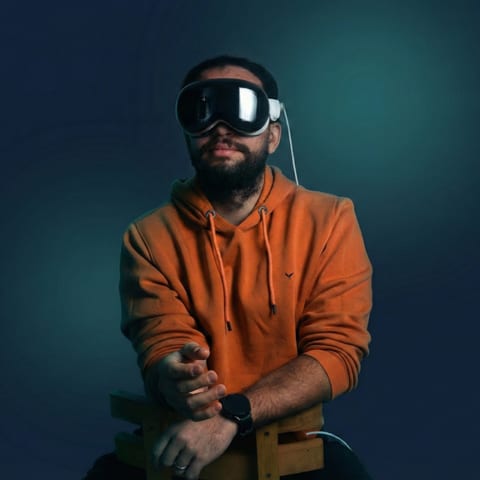
If you are choosing hardware for a VR training rollout, here is the honest short answer: the best all-around enterprise VR headset for 2026 is the PICO 4 Ultra Enterprise, the best value pick for large pilots is the Meta Quest 3S, and the HTC VIVE Focus Vision wins when visual fidelity is non-negotiable. We build and deploy enterprise VR training for a living, and the device almost never makes or breaks a program. The management layer around it does.
This is a hardware-first buyer's guide. If you still need to decide whether VR fits your training problem at all, start with our 2026 buyer's guide to VR for corporate training and the broader enterprise VR training overview. This post assumes you have decided to ship, and now you need to pick a device and deploy a fleet.
Which VR Headset Is Best for Enterprise Training in 2026?
For 2026, the strongest all-around enterprise VR headset is the PICO 4 Ultra Enterprise, which pairs a Snapdragon XR2 Gen 2 processor and 12GB of RAM with the PICO Business Suite for built-in fleet management, earning it a top all-around rating for enterprise VR (ArborXR, 2026). That combination of performance and native device management is what separates it from consumer hardware.
The reason it leads is not raw specs. Plenty of headsets run the same chip. It is that the device management comes built in, so your IT team can provision and lock down a fleet without stitching together third-party tools. For an organization rolling out hundreds of seats, that integration is worth more than a marginal bump in resolution.
Here is how the main contenders compare for enterprise training use:
| Headset | Best for | Why |
|---|---|---|
| PICO 4 Ultra Enterprise | Best all-around fleet | XR2 Gen 2, 12GB RAM, built-in PICO Business Suite fleet management |
| Meta Quest 3S | Large pilots, lowest cost-per-seat | Same XR2 Gen 2 chip as Quest 3, full-color passthrough, value pricing |
| Meta Quest 3 | Mature standalone default | Strong tooling and content support; needs a managed layer at scale |
| HTC VIVE Focus Vision | Fidelity-critical training | Sits a tier above the cost-optimized Quest line on visual quality |
Treat this as a starting shortlist, not a verdict. The right pick is the one that matches your content's fidelity needs, your deployment scale, and your IT team's management requirements. We walk through each of those below.
What Is the Lowest Cost-Per-Seat Headset for Large Pilots?
The lowest cost-per-seat option for large training pilots is the Meta Quest 3S, which runs the same Snapdragon XR2 Gen 2 chip as the pricier Quest 3 and includes full-color passthrough, making it the value pick when you are equipping a big cohort (VR Expert, 2026). For pilots, cost-per-seat usually matters more than peak fidelity.
This is the calculation we walk most clients through. A pilot's job is to validate the training outcome with a real cohort, not to deliver maximum visual quality. When you are buying 50 or 200 headsets to prove a program works, the per-unit price multiplies fast, and the Quest 3S keeps that line item sane while still running modern XR2 Gen 2 content.
The trade-off is honest: the Quest 3S trims display and lens quality versus the Quest 3, so it is a value device, not the fidelity champion. For most procedural and soft-skills training, that trade is invisible to the learner. For a photoreal medical or precision-assembly scenario, it may not be, and that is where a higher tier earns its cost.
Do You Need an Enterprise Headset Tier or Will a Consumer Quest 3 Do?
You need an enterprise tier the moment you manage a fleet, because enterprise headsets add MDM, kiosk mode, commercial warranties, business-grade security, and dedicated support, and a consumer Quest 3 requires a paid managed-services or third-party MDM layer to manage at scale (ArborXR, 2026). The consumer device is rarely cheaper once you add what is missing.
The mistake we see most often is treating this as a pure price comparison. Yes, a consumer Quest 3 costs less on the invoice. But to provision, secure, update, and audit it across a corporate fleet, you have to buy a management layer separately. By the time you have added that, the enterprise tier or a managed consumer setup often costs about the same and saves your IT team a great deal of manual work.
When a Consumer Headset Is Actually Fine
For a small proof of concept, five or ten headsets you set up by hand, a consumer Quest 3 is perfectly reasonable. There is no fleet to manage, no compliance audit, and no remote-update burden. We routinely prototype on consumer hardware before a client commits to a deployment device.
When You Have Outgrown It
Once you cross into dozens of units, multiple sites, or any security and compliance review, the manual approach collapses. Kiosk mode (booting straight into your one training app), remote content updates, and the ability to lock and wipe a lost headset stop being conveniences and become requirements. That is the line where the enterprise tier pays for itself.
How Should Fidelity Needs Change Your Headset Choice?
Fidelity should move you up a tier only when the training outcome depends on it, and for those cases the HTC VIVE Focus Vision sits above the cost-optimized Quest line as the fidelity-forward enterprise choice (VR Vision, 2026). For most training, the Quest tier is enough; for some, it is not.
The practical test we apply is whether visual detail is part of what the learner has to perceive and decide on. A de-escalation or onboarding scenario is about behavior and judgment, so the cost-optimized devices serve it well. A scenario where a trainee must spot a hairline defect, read a fine gauge, or judge subtle material differences is a different problem, and a fidelity-critical headset like the VIVE Focus Vision is worth the premium there.
Do not pay for fidelity you cannot use. The most common over-spend in enterprise VR hardware is buying a premium headset for content that never stresses the display. Match the device to what the learner's eyes actually have to do, and the budget tends to sort itself out.
How We Pick Hardware on a Real Client Rollout
We choose the device last, not first, and that order is deliberate. We built Immersive Exposure on the Meta Quest line, and the Quest family remains a sensible standalone default because of its mature tooling and the value cost-per-seat of the Quest 3S. But the right headset is a function of three earlier decisions, not a default we apply to every project.
First, we lock the content fidelity target, because that sets the floor for which devices are even eligible. Second, we size the deployment, meaning how many seats, how many sites, and what the IT and compliance teams require, because that determines whether you need built-in fleet management like the PICO Business Suite or a managed Quest setup. Third, we map the management and logistics around the device: MDM, kiosk mode, spare units, charging, and a hygiene workflow.
Only then does the headset choice fall out cleanly. PICO 4 Ultra Enterprise when fleet management has to be native and seamless, Quest 3S when cost-per-seat rules a large pilot, VIVE Focus Vision when fidelity is the whole point. The cost side of this, including how device logistics fold into a program budget, is something we break down in our VR app development cost and timeline guide. We stay vendor-neutral on purpose, because the best device genuinely changes from one rollout to the next.
The Real Cost Is the Fleet, Not the Headset
The headset on your purchase order is the cheap part. What actually determines whether a VR training rollout succeeds is the layer around the device: the management software, the deployment process, and the logistics of keeping a fleet charged, clean, updated, and secure. Enterprise tiers exist precisely because that layer is hard, and they bake in the MDM, kiosk mode, security, and support that consumer hardware leaves you to assemble.
So pick the device that matches your fidelity, your scale, and your IT requirements, in that order. For most programs in 2026, that means the PICO 4 Ultra Enterprise for an all-around managed fleet, the Meta Quest 3S for a cost-sensitive large pilot, or the HTC VIVE Focus Vision when fidelity is the point. Get the deployment model right first, and the hardware decision becomes the easy one. If you want a tailored recommendation for your rollout, our enterprise VR training team scopes device, fleet, and content together.