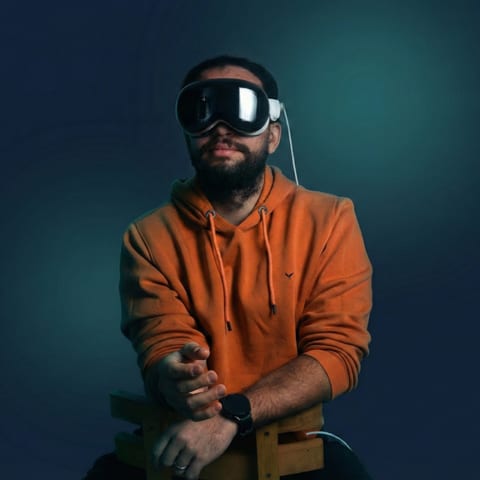

If you are planning to hire VR developers, the honest short answer is this: expect to pay US developers roughly $113,000–$182,000 a year depending on specialization, or engage nearshore talent for around $35 an hour, and the bigger decision is not who you hire but how you hire. We build VR for enterprise clients, and the question we hear most is whether to bring developers in-house, contract freelancers, or work with a studio. There is no single right answer, only the right answer for your stage.
This guide lays out the real US and nearshore rates, the trade-offs between in-house, freelance, and agency, what a VR team is actually made of, and the red flags worth walking away from.
How Much Does It Cost to Hire VR Developers?
VR talent is not cheap, and the spread is wide. In the US, AR/VR developers average roughly $113,000–$127,000 per year, about $55–$61 per hour (Salary.com), while specialized VR software engineers average around $182,000 per year, about $87 per hour (Glassdoor). The difference reflects depth: shader work, physics, and standalone-headset optimization command a premium.
Region changes the math entirely. Nearshore and offshore VR developers can be engaged for roughly $35 per hour, well below US rates, though management overhead and rework can erode the saving (Mobilunity). That gap is real, but so is the hidden cost of coordinating it.
Here are the working rate bands we and the wider market see today. Treat them as planning numbers, not quotes.
| Hiring model | Typical rate | Best for |
|---|---|---|
| US AR/VR developer (in-house or contract) | $55–$61/hour ($113K–$127K/yr) | Core, long-term VR capability |
| US specialized VR software engineer | ~$87/hour (~$182K/yr) | Deep technical work: shaders, physics, optimization |
| Nearshore / offshore developer | ~$35/hour | Well-specified, modular work with strong oversight |
| Agency / studio (full team) | Higher upfront, all-in | End-to-end build: strategy, design, build, QA |
One number that catches teams off guard: a full-time hire typically adds 25–40% on top of base salary for benefits, payroll taxes, and PTO (Developers.dev). So a $127,000 engineer is closer to a $160,000–$178,000 line item once fully loaded. That figure matters when you compare a salaried hire against a contract or agency rate.
In-House vs Freelance vs Agency: Which Should You Choose?
There is no universally correct model, only the one that fits your stage and roadmap. Freelancers suit MVPs and prototypes but add project-management overhead and code-consistency risk; agencies deliver end-to-end work, strategy, design, build, and QA, at a higher upfront cost (Developers.dev). In-house sits between them: highest commitment, best for sustained work.
Let's be plain about when each one wins, including when it is not us.
When freelance is the right call
Hire a freelancer when you have a tightly scoped, short-lived job: a proof of concept, a single feature, a prototype to test an idea before committing budget. One strong contractor can move fast and cost little. The trade-off is real, though. You become the project manager, you carry the risk if they vanish mid-build, and code consistency suffers when a build passes through hands that never coordinate. For a true MVP, that is often an acceptable trade.
When in-house is the right call
Build an in-house team when VR is a long-term, core part of your product, not a one-off project. If you have a multi-year roadmap and steady work to keep specialists busy, owning the capability pays off. The honest caveat: VR specialists are expensive and hard to recruit, and an idle team is pure burn. Hiring in-house for a single project almost never makes sense once you factor in recruiting time and the 25–40% benefits load on every salary.
When an agency is the right call
An agency or studio earns its higher upfront rate when you need a complete team now, with no recruiting lead time and no gaps in skill. You get engineering, 3D art, and QA under one roof, plus a process that has shipped before. We are an agency, so weigh this accordingly, but the model fits best when speed-to-ship matters, when the project spans multiple disciplines, or when you simply do not want to manage five contractors yourself. If VR later becomes core, many clients use the agency build to de-risk the roadmap, then hire in-house from a position of knowledge. Our guide to what separates VR studios that ship digs into how to vet one.
What Roles Make Up a VR Development Team?
Here is the part teams most often underestimate: a real VR build is not one generalist, it is a small team of specialists. A polished, comfortable VR experience needs engineering, 3D art, and QA working together, which is exactly why agencies deliver end-to-end where a lone freelancer cannot (Developers.dev). Trying to cover all of it with one hire is the most common staffing mistake we see.
A production VR team usually breaks down into five roles.
Unity (or Unreal) engineer
This is the person who builds interaction logic, input handling, physics, networking, and the systems that make the world respond. They are the core hire, and on standalone headsets their optimization skill is the difference between a comfortable experience and one that makes users queasy. Engine choice matters here too; we cover it in our Unity vs Unreal comparison for enterprise VR.
3D artist
VR is a visual medium, and 3D content is frequently the largest slice of the budget. The 3D artist models environments, props, and characters, then optimizes them to run within a strict polygon and texture budget. Good VR art is not just attractive, it is performant, which is a different skill from film or game cinematics.
Technical artist
The technical artist bridges art and engineering. They build shaders, manage lighting, and keep the visual quality high while holding frame rate. On VR projects this role is quietly critical: it is where most performance problems get solved before they ever reach QA.
QA tester
VR QA happens on real headsets, not in the editor. A dedicated tester validates comfort, frame rate, interaction edge cases, and behavior across devices. Skipping on-device QA is how projects ship motion sickness and broken interactions, so we treat it as non-negotiable rather than optional polish.
Project manager
Someone has to keep scope, schedule, and the four roles above aligned. On a freelance build, that someone is usually you. On an agency build, it is the PM. Either way the coordination work is real, and pretending it is free is how timelines slip.
How Should You Hire VR Developers? Our Approach
We will give you the same advice we give clients before they decide whether to work with us. Match the model to the stage: prototype with a freelancer or a small agency engagement, ship production with a full team, and only build in-house once VR is proven core to your roadmap. The biggest cost mistake is not the hourly rate; it is hiring the wrong shape of team for the work in front of you.
When we scope a build, we staff against the five roles above rather than against a headcount target, because a missing technical artist or QA tester costs more in rework than it ever saves in salary. We are honest when a client is better served by a freelancer or by hiring in-house, because an unhappy match helps no one. If you want to talk through a specific project, our hire VR developers page is the place to start, and our breakdown of VR app development cost and timelines shows how team shape maps to budget.
What Are the Red Flags When Hiring VR Developers?
The fastest way to avoid an expensive mistake is to know the warning signs before you sign. The single biggest one is a portfolio with no shipped, on-device VR work. Flat-screen demos and concept videos do not prove headset competence, and VR's hardest problems, comfort, frame rate, and standalone optimization, only show up on real devices.
Watch for these other red flags too:
- The "one person does everything" pitch. Anyone claiming a single hire can deliver engineering, 3D art, and QA at production quality is overpromising. A real build needs the specialist mix above.
- No QA plan on real hardware. If testing happens only in the editor, motion sickness and broken interactions will reach your users instead of getting caught.
- Vague answers on frame rate and comfort. Strong VR developers talk in concrete targets, like a locked 72 or 90 frames per second, not in generalities.
- No optimization story for standalone headsets. Quest and similar devices are mobile hardware. If a developer has no clear process for performance on constrained chips, the experience will struggle.
None of these are disqualifying on their own, but two or three together are a clear signal to keep looking.
Hiring VR Developers Without Overpaying
Hiring VR developers comes down to matching the model to your stage and staffing the full team, not just the cheapest seat. US developers run $113,000–$182,000 a year, nearshore talent near $35 an hour, and a full-time hire carries a 25–40% load on top of base salary. Freelancers fit prototypes, in-house fits long-term core work, and agencies fit when you need a complete, proven team now.
Whichever route you choose, remember that a shippable VR experience is a team sport: a Unity engineer, a 3D artist, a technical artist, a QA tester, and a PM, working to concrete performance targets on real hardware. Get the team shape right and the rates take care of themselves.