
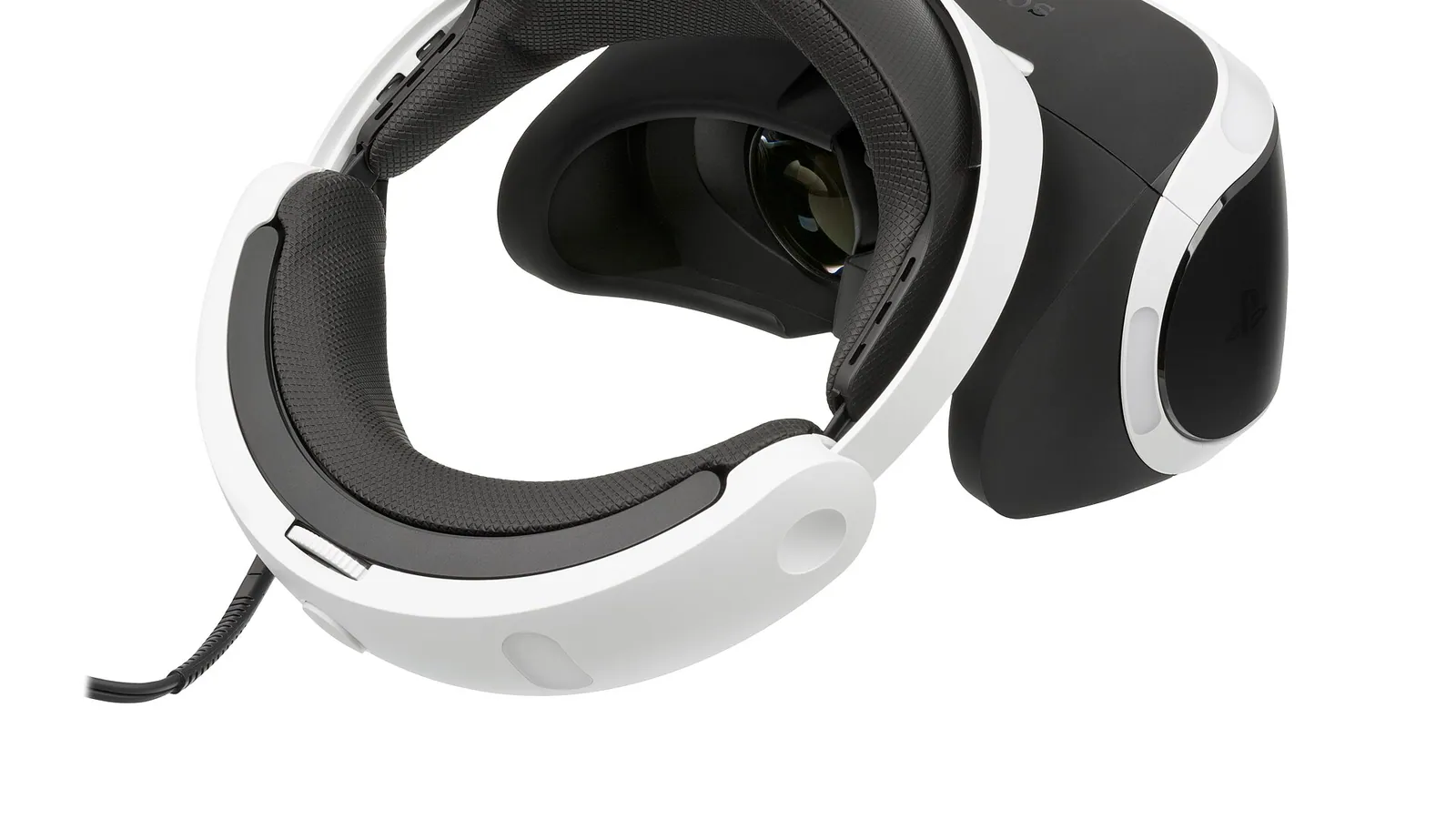
If you have heard the name but not the substance, here is the direct answer: Android XR is Google's extended-reality operating system, announced on December 12, 2024 and built with Samsung and Qualcomm, and it is deeply integrated with Google's Gemini AI (Wikipedia, 2024). In plain terms, it is a version of Android made for headsets and glasses, with an AI assistant sitting at the center of how you use the device.
This guide explains what Android XR actually is, who builds it, the role Gemini plays, the first device you can buy, the app model that makes the platform interesting, and where the whole thing is heading. It is a top-of-funnel explainer, not a build tutorial. If you want the developer-side detail, that lives in our guide to Android XR app development.
What Is Android XR, Exactly?
Android XR is Google's operating system for extended reality, announced on December 12, 2024 and developed together with Samsung and Qualcomm, with deep integration into Google's Gemini AI (Wikipedia, 2024). Think of it as Android reimagined for spatial computing: the same underlying platform that powers phones and tablets, adapted for headsets and, eventually, glasses.
The "XR" stands for extended reality, the umbrella term covering virtual reality, augmented reality, and mixed reality. Android XR is not a single app or a feature you add to a phone. It is a full operating system layer, the way visionOS is for Apple and Horizon OS is for Meta. What sets it apart is the partnership behind it and the AI assistant baked into its core, which we will get to shortly.
For a business evaluating the space, the takeaway is simple. Android XR is Google's serious entry into spatial computing, and it arrives backed by two of the largest names in consumer hardware and mobile silicon.
Who Builds Android XR, and Why Does That Matter?
Three companies built Android XR together: Google, Samsung, and Qualcomm, with the platform announced on December 12, 2024 (Wikipedia, 2024). Each plays a distinct role, and understanding the split tells you a lot about how serious the effort is.
Google owns the operating system and the Gemini AI layer. Samsung builds the flagship hardware, the Galaxy XR headset. Qualcomm supplies the processor, the Snapdragon XR2+ Gen 2, that runs it all. This is the same coalition pattern that made Android dominant on phones: a software platform from Google, hardware from a major manufacturer, and silicon from a specialist chipmaker.
Why does that matter for you? Because a platform with that backing is unlikely to be abandoned quietly. When you weigh whether to invest in building for a new ecosystem, the credibility of the people behind it is part of the risk calculation, and here it is about as strong as it gets.
What Is the Samsung Galaxy XR?
The Samsung Galaxy XR, codenamed Project Moohan, is the first Android XR device. It launched in October 2025 at $1,799 and runs a Qualcomm Snapdragon XR2+ Gen 2 with dual micro-OLED displays, 16GB of RAM, and 256GB of storage (Road to VR, 2025). It is the reference device for the whole platform.
Here is how the headline specs break down:
| Spec | Samsung Galaxy XR |
|---|---|
| Codename | Project Moohan |
| Launch | October 2025 |
| Price | $1,799 |
| Processor | Snapdragon XR2+ Gen 2 |
| Displays | Dual micro-OLED |
| Memory | 16GB RAM |
| Storage | 256GB |
The price point is worth dwelling on. At $1,799, the Galaxy XR undercuts Apple's Vision Pro significantly while still sitting well above mainstream Meta Quest hardware, which positions it as a premium but not stratospheric device. We dig into exactly how it stacks up against those rivals in our Android XR vs Apple Vision Pro vs Meta Quest comparison.
The Galaxy XR is the device most people will mean when they say "an Android XR headset" today. But it is built as the first of many, not the whole story.
How Does Gemini Fit Into Android XR?
Gemini, Google's AI model, is woven directly into Android XR rather than added as a separate app. It powers navigation, surfaces real-world context about what you are looking at, and can auto-spatialize ordinary 2D photos and video into 3D (Wikipedia, 2024). This is the feature that makes the platform genuinely distinct.
Consider what that means in use. Instead of poking through menus, you talk to the device. Gemini understands the space around you and the content you are viewing, then acts as the connective tissue between you, your apps, and the physical world. Turning a flat photo into something with depth, automatically, is the kind of capability that only becomes practical when an AI model sits at the heart of the system.
Is this just a marketing layer? We do not think so. The decision to make the assistant the primary interface, rather than a side feature, is the clearest signal of how Google sees spatial computing evolving. The headset is the body; Gemini is meant to be the brain. That AI-first framing is the single biggest reason Android XR reads differently from the headset platforms that came before it.
How Does the Android XR App Model Work?
Devices powered by Android XR run standard Android mobile apps alongside made-for-XR native apps (Android Developers, 2025). That dual model is the quiet superpower of the platform, and it solves the chicken-and-egg problem that has hurt every previous headset launch.
New platforms usually die in the cold-start gap: no apps means no users, and no users means no apps. Android XR sidesteps that. Because it runs the existing Android catalog, the Galaxy XR is useful on day one, even before a single bespoke XR app exists. Developers can then layer richer, fully spatial native experiences on top over time.
For a studio, the practical implication is a gentle on-ramp. A team can bring an existing Android app to the headset with relatively little friction, then invest in native XR features once there is a reason to. This is exactly why we treat Android XR as an extension of the Android and Unity work we already do, rather than a from-scratch platform. The build-side mechanics, the SDKs, the engines, and the porting path, are covered in our Android XR development services and the companion developer guide.
Where Is Android XR Headed?
Google and Samsung have framed the Galaxy XR as the first of a broader roadmap of AI-native form factors, including AI glasses (Road to VR, 2025). The headset is the opening move, not the endgame, and that ambition shapes how you should read the whole effort.
The most telling part is the glasses ambition. A full headset is a deliberate, sit-down device; lightweight AI glasses would be an all-day wearable, with the same Gemini-first interaction model in a far more casual form factor. Read alongside the platform's name, the strategy looks familiar: just as Android spans phones, tablets, watches, and TVs, Android XR is being built to span a family of devices from headsets to glasses.
So the honest answer to "where is this going" is breadth. The Galaxy XR proves the model; the roadmap is about pushing that model into devices people might actually wear all day. For anyone deciding whether to take the platform seriously, that long arc matters more than any single launch.
How We Think About Building for Android XR
We will be straight with you: as a new platform, Android XR does not yet have a long list of shipped client projects behind it, and we will not pretend otherwise. What we can point to is the stack it is built on. Virtual Verse Studio has delivered 50-plus immersive projects since 2021 on Unity 6, ARCore, OpenXR, Android, and Meta Quest, which is precisely the foundation Android XR sits on.
That overlap is the point. Android XR is Android, it speaks OpenXR, and the engine work is the same Unity 6 pipeline we already run for Quest and mobile AR. So our readiness here is not a guess; it is transferable experience. The spatial interaction patterns, the performance discipline, the 3D content workflows, the device-specific QA, all of it carries over directly to a Galaxy XR build.
Our position, then, is capability rather than a finished case study. When a client wants to be early on Android XR, the work draws on years of shipping on the exact technologies underneath it. That is a more honest, and frankly more useful, place to start than a manufactured success story.
Android XR is one of the most significant platform launches in spatial computing, a real operating system from Google, real hardware from Samsung, real silicon from Qualcomm, and an AI assistant designed to sit at the center of it. If you are sizing up the opportunity, start by understanding the platform on its own terms, then talk to a team whose existing stack already matches it.