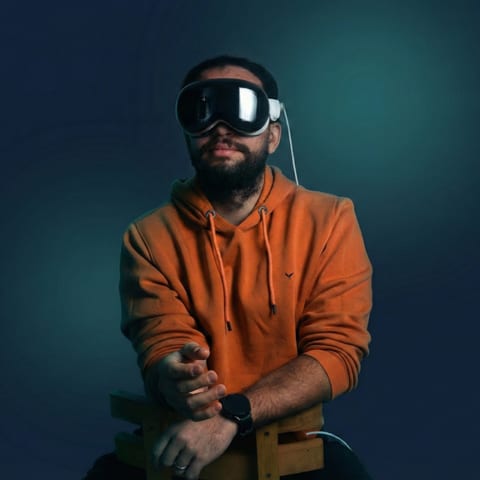

If you last checked on Android XR at launch, here is the mid-2026 state of play in one sentence: Galaxy XR is now a three-market product after its July 8 UK launch at £1,699, the SDK officially supports Unity, Unreal, and Godot, and April's firmware quietly turned the headset into a manageable enterprise device (Samsung UK, 2026). None of those three things was true at the start of the year.
We covered the platform fundamentals in what Android XR is and the device itself in our Galaxy XR development guide. This post is strictly the delta: what changed between launch and July 2026, and what it means if you are planning a build.
What Changed for Android XR in the First Half of 2026?
The short answer is that Android XR moved from "launched" to "operational." The catalog of XR-optimized apps passed 100, more than double the count at launch (Google, 2026), the device left its home markets, and the developer stack gained two new engines and a desktop testing tool.
Three threads matter most, and they map to the three audiences reading this. For buyers, the geographic rollout signals Samsung's commitment. For developers, SDK Developer Preview 4 and the Unity 6.5 tooling shrink the build cost. For enterprise teams, and this is the headline for our clients, the April firmware finally made Galaxy XR a device an IT department can enroll, lock down, and wipe remotely.
Context still matters, though. Meta held 75.7% of the XR market in Q3 2025, and IDC forecasts roughly 13.6 million XR units shipping in 2026, with see-through glasses as the fastest-growing category (IDC, 2026). Android XR is gaining capability fast, but it is still the challenger, not the incumbent. How you plan for that shapes everything below.
Where Can You Actually Buy a Galaxy XR Now?
Galaxy XR arrived in the UK on July 8, 2026 at £1,699, its first market beyond the US and South Korea, after pre-orders opened June 17, with in-person demos at Samsung KX and Westfield London (Samsung UK, 2026). The US model still sells at $1,799 for 256GB (Samsung, 2026).
The expansion reportedly continues from there. Germany, France, and Canada are next in line for 2026 according to press reports, though Samsung itself has not confirmed those markets (SamMobile, 2026). For teams planning European or Canadian deployments, that distinction matters: plan around it, but do not put a contractual date on it yet.
Samsung is also servicing the device at a steady cadence. The July 13 firmware, build I610UEU2AZF3 at roughly 1.5GB, delivered the June security patch along with hand-tracking improvements that users reported noticing immediately (SammyGuru, 2026). That followed April's larger feature drop, which added Auto Spatialization to convert 2D content into 3D, wall pinning for persistent app placement, real hand visualization, and session resumption (Google, 2026).
One honest caveat on scale: Samsung has published no official unit figures, and analyst-derived estimates put 2025 Galaxy XR shipments around 40,000 units (Treeview, 2026). This is a premium, early-adopter installed base. The rollout widens the funnel, but nobody should build a consumer business case on volume alone this year.
How Has the Developer Tooling Matured?
The biggest tooling shift is engine choice. SDK Developer Preview 4, released in May, made Unreal Engine and Godot officially supported alongside Unity, opened an early preview of a Geospatial API built on ARCore and Google's Visual Positioning Service covering 87 countries, and confirmed the core Jetpack XR libraries are moving to Beta soon (Android Developers Blog, 2026).
June brought the workflow layer. Google shipped the Android XR Engine Hub, a Windows desktop tool for real-time testing without constantly deploying to a headset, plus Jetpack Projected for extending mobile apps to eyewear and a Device Availability API. The Developer Catalyst Program also opened, with dev kits promised this summer (Android Developers Blog, 2026). Together these close real gaps: iteration speed and hardware access were the two loudest developer complaints at launch.
What changed on the Unity side?
Unity's OpenXR Android XR 1.13 package now targets Unity 6.5 Beta, extends Application SpaceWarp to uGUI and TextMeshPro, adds a Spatial Entities package, and lets a single APK run across Galaxy XR and the upcoming XREAL Aura glasses, with Unity 6 as the minimum version (Unity, 2026). One APK, two very different form factors. That is a genuinely useful consolidation.
A technical clarification worth stating plainly, because we see it confused constantly: Android XR uses Unity's OpenXR plugin, not PolySpatial. PolySpatial is a visionOS-only technology. If a vendor tells you your Android XR build needs PolySpatial, that is a signal they have not shipped on this platform.
How hard is a Quest port now?
Less hard than the market assumes. Unity reports that roughly 70% of existing Quest project code works on Android XR out of the box, and Owlchemy Labs ported major titles in about a week (Unity, 2026). In our experience scoping ports, the remaining 30% concentrates in input, permissions, and platform services, not in the interaction core you spent your budget on. If you already have a Quest app, the marginal cost of an Android XR presence has dropped sharply since January.
What Can Enterprise Fleets Do With Galaxy XR Now?
This is the section that matters most for our clients, and the change is substantial. April's firmware brought Android Enterprise to Galaxy XR: fully managed and dedicated device modes, zero-touch and QR-code enrollment, Managed Google Play, Knox hardware-backed security, remote lock and wipe, and a 5-year software update commitment (Samsung Newsroom, 2026).
Translate that from IT language: a company can now buy a fleet of headsets, enroll them without unboxing each one by hand, push a locked-down app catalog, restrict a device to a single training app in dedicated mode, and wipe a lost unit remotely. That is the baseline phones and tablets have had for a decade, and headsets need it before any serious deployment conversation starts. Galaxy XR now clears that bar.
The management ecosystem is forming around it. Google has named ArborXR, ManageXR, and Microsoft Intune as supporting MDM platforms (Google, 2026). On Samsung's side, Knox Manage v26.06 shipped first-phase XR device management, and the published roadmap has v26.10 in October adding a dedicated XR console and kiosk modes (Samsung Knox, 2026). If your organization already runs Intune or Knox, Galaxy XR slots into tooling you own.
Now the honest note, because we would rather you hear it from us: no named enterprise Galaxy XR deployments have been published yet. The management plumbing arrived in April; reference customers have not. If you deploy in the second half of 2026, you are early, with the leverage and the risk that implies. We compared the enterprise trade-offs across ecosystems in our Android XR vs Apple Vision Pro vs Meta Quest breakdown, and that calculus now tilts more favorably toward Android XR than it did when we wrote it.
What Is Coming in the Fall Hardware Wave?
The confirmed picture first. At I/O 2026 in May, Google laid out two eyewear categories: audio-first AI glasses shipping this fall, pairing with both Android and iOS phones, and display glasses arriving later, with Samsung, Warby Parker, Gentle Monster, and Qualcomm named as partners, though no price, product name, or exact date was announced (Google, 2026). The iOS compatibility detail is easy to miss and strategically loud: Google wants these on every face, not just Android owners.
The second confirmed device is XREAL's Project Aura, the first non-Samsung Android XR hardware. Aura is a tethered optical see-through design with a roughly 70-degree field of view, powered by XREAL's X1S chip plus a compute puck, shipping before the end of 2026 at a base price at or below $1,500 (XREAL, 2026; Road to VR, 2026). Remember the Unity note above: a single APK can already target both Aura and Galaxy XR.
Then the rumor, labeled as exactly that. Reports describe display-less Samsung AI glasses, codename "Jinju," at roughly $379 to $499 on a Snapdragon AR1 chip, possibly appearing at Unpacked on July 22, 2026, four days after this post publishes, with a premium "Haean" model rumored for 2027 (TechRepublic, 2026). None of this is confirmed by Samsung. Treat it as a date to watch, not a plan to build against.
One counter-signal deserves a place here too: Vivo built its own Android-based spatial OS rather than adopting Android XR (VR.org, 2026). The platform is winning partners, but it has not unified the ecosystem, and fragmentation remains a live risk worth pricing into any multi-year platform bet.
What Does This Mean If You Are Planning an Android XR App Now?
Our read, having built on this stack since before Galaxy XR shipped: the platform crossed a practical threshold this spring. IDC's forecast of roughly 13.6 million XR units in 2026, with see-through glasses growing fastest (IDC, 2026), describes a market moving exactly toward the form factors Android XR is built to span. The mid-2026 changes convert that thesis into things you can act on today.
Concretely, we would sequence it like this:
- If you have a Quest app, scope the port now. With about 70% of code working out of the box, an Android XR build is weeks of work, not a second project.
- If you are an enterprise buyer, pilot in H2 2026. Enrollment, kiosk-style dedicated mode, and remote wipe exist today, and the Knox Manage v26.10 console lands in October. Being early means shaping the reference deployments others will read about.
- If you are eyeing the glasses wave, build panel-first on the headset now. Jetpack Projected and the single-APK Unity path mean today's Galaxy XR work is the on-ramp to Aura and whatever ships this fall.
- If you were waiting for engine support, stop waiting. Unity, Unreal, and Godot are all officially in.
The gap between "interesting platform" and "deployable platform" closed in the first half of 2026; the gap between deployable and proven closes with whoever moves next. We build on Unity 6, OpenXR, ARCore, and Android every day, and our Android XR development page covers how we scope this work. If you want to pressure-test a specific project against everything above, talk to us and we will give you the same honest read we have given here.