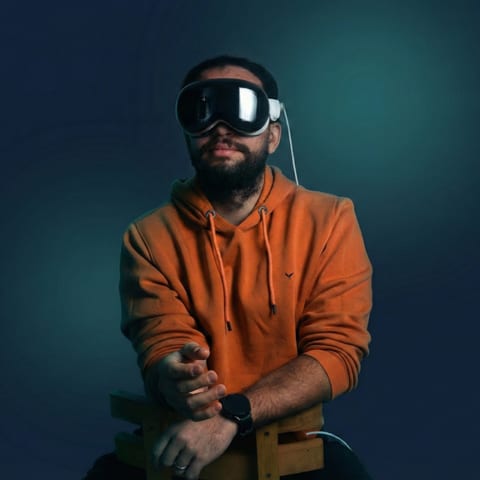

Most VR projects that miss their deadlines don't fail in the build. They fail in scoping, the pre-build conversation where a broad vision should have become a precise, agreed list of what the first release does and, just as importantly, what it does not. When that conversation is rushed or skipped, the unspoken expectations resurface mid-project as rework, and you discover them with no room left to absorb them.
We've shipped VR app development projects under hard deadlines, a Meta Quest App Store release for Immersive Exposure and a live museum installation for Iman VR, and the pattern is consistent: what ships on time was scoped before the build started, not negotiated during it.
This post is about that scoping work specifically: how to define requirements, prioritize ruthlessly, align stakeholders, and draw a clean line between what makes the MVP and what gets deferred to phase 2. It's product-led, pre-build thinking. For the engineering side of cutting decisions, see our companion piece on VR development tradeoffs.
What Is VR Project Scoping, and Why Does It Decide Whether You Ship?
VR project scoping is the pre-build act of turning a vision into a defined, agreed set of requirements: what the first release must do, who it serves, and what it deliberately leaves out. Poorly defined scope is the most common driver of VR overruns, which is why locking it early, not engine choice, most reliably predicts an on-time launch.
Here's the trap. A client describes a feature in one sentence, "users can collaborate in a shared space," and everyone nods. But that sentence hides a dozen decisions: how many users, what they can do together, whether voice is in scope, what happens when someone disconnects. Scoping is the work of surfacing those decisions before anyone builds, while they're still cheap to answer.
Citation capsule: In our delivery experience across more than a dozen VR builds, the projects that shipped on schedule were not the ones with the fastest engineers. They were the ones where scope, the MVP definition and an explicit out-of-scope list, was written down and agreed before production began. Vague scope is the single most reliable predictor of overrun.
The counterintuitive part is that scoping is mostly about subtraction. New teams treat a scoping doc as a place to capture everything stakeholders want. The teams that ship treat it as a place to record what they've agreed not to do yet. A vision document grows; a scope document shrinks. If your scope review ends with more in the build than it started, you didn't scope, you just transcribed.
The reason this matters more in VR than in conventional software is visualization. Stakeholders can read a 2D wireframe and roughly picture the product. Almost nobody can read a written brief and accurately picture a 3D interactive space. So requirements that feel locked are frequently still ambiguous, and that ambiguity is precisely what turns into rework once a real environment exists to react to.
That rework is also where budgets quietly bleed: because labor dominates VR spend, every unscoped feature is effectively an unbudgeted hire. We unpack that link between scope and spend in our VR app development cost breakdown.
How Do You Define Requirements for a VR Experience?
Requirements definition is where scoping gets concrete: you name the primary user, the one outcome the experience must deliver, and the conditions it has to work under. In our experience, the requirement most teams forget to capture is the deployment environment, and it's the one that most often forces a feature back into phase 2.
Good VR requirements answer questions a 2D brief never has to. Will users be standing or seated? Wearing gloves? Can they hold controllers, or do their hands need to be free? Is there voice in the room, or is it a silent gallery? Each answer narrows the design space and quietly settles arguments that would otherwise erupt during the build.
Capturing the constraints stakeholders forget
The most expensive requirements are the unstated ones. Industrial settings where workers wear gloves, healthcare contexts where users can't grip controllers, a museum floor where a 12-minute experience has to reset between visitors: these are environmental constraints, and they belong in the requirements document, not in a QA-phase surprise. We ask every client to describe the exact room, audience, and session length before we agree what's in scope.
Citation capsule: VR requirements differ from conventional software requirements because the physical deployment context is a hard constraint, not a detail. In our scoping work, the single most common omission is session and environment context, the room, the audience, and how long each user has, which directly determines which features are realistic for a first release.
For Immersive Exposure, our VR education platform released on the Meta Quest App Store, the requirements were scoped tightly before any environment was built: a focused photography-lesson flow for a single learner, with a shared community space defined as a later addition rather than a launch requirement. The client noted that we "released early on the Meta Quest App Store, meeting expectations." That outcome came from agreeing the requirement set in Sprint 1, not from heroics in Sprint 10.
We've learned to run a deliberately blunt requirements question at kickoff: "If we could only ship one thing, what is it?" The first answer is usually a paragraph. We keep pushing until it's a sentence. That sentence becomes the spine of the scope, and every later request gets measured against it.
How Do You Prioritize Features for a VR MVP?
Prioritization is where a wish list becomes a buildable MVP. The most reliable tool we use is MoSCoW: sort every requested feature into Must have, Should have, Could have, or Won't have. Musts define the minimum viable experience; the rest become an ordered, documented backlog for phase 2. A feature earns "Must" only if the project fails its core objective without it.
The discipline lives in the definition of "Must." Stakeholders instinctively label almost everything a Must, because everything feels important when nothing has been built yet. So we apply a single test: would the experience still achieve its one core outcome without this feature? If yes, it isn't a Must. That question alone moves most of a typical wish list into Should and Could.
Turning the wish list into a defensible cut line
Once features are sorted, the cut line writes itself. Musts are the build. Shoulds are the first candidates for phase 2 if time allows. Coulds are explicitly parked. Won'ts are recorded so they don't quietly creep back in. The output is a one-page artifact every stakeholder has seen and agreed to, which is what makes a later "but I assumed this was included" conversation short instead of painful.
Citation capsule: MoSCoW prioritization (Must, Should, Could, Won't have) converts an open-ended VR feature request into a defensible MVP and a documented phase-2 backlog. In our scoping practice, the value isn't the labels themselves, it's forcing stakeholders to agree, in writing and before the build, on what the first release will not include.
For Iman VR, our immersive journey through the life of the Prophet Muhammad built for the International Fair and Museum of the Prophet's Biography, prioritization was inseparable from accuracy. Working with curators and historians, we scoped which reconstructions, artifacts, and narrative moments were non-negotiable Musts for the installation, and which enrichments could wait. Agreeing that cut line with stakeholders before modeling began is exactly how a content-heavy build met a fixed museum-installation deadline.
Across our recent VR builds, the features stakeholders fight hardest to keep in the MVP are rarely the ones users engage with most after launch. We've repeatedly watched a "Could have" social or customization feature deferred to phase 2 turn out to be exactly what users asked for later, which is a far better outcome than shipping it half-built and late. Deferring is not losing the feature; it's earning the data to build it well.
How Do You Align Stakeholders Before a VR Build Starts?
Stakeholder alignment means getting everyone who can change the scope to agree on it, in writing, before production starts. It's the step teams skip most and pay for most. A scope that lives only in the project lead's head is not a scope; it's a set of private assumptions waiting to collide once the first real environment exists for people to react to.
Alignment has to include the right three roles, or it isn't alignment. You need the business sponsor who can authoritatively say what success looks like, the subject-matter experts who define content and accuracy requirements, and a technical lead who can price each request in effort. Drop the sponsor and priorities drift. Drop the experts and requirements are simply wrong. Drop the technical lead and the wish list ignores what's actually achievable.
Making the scope a shared, signed artifact
We turn alignment into a single document everyone reviews: the core outcome, the MoSCoW-sorted feature list, the explicit phase-2 deferrals, and the out-of-scope items. Then we put it under change control. Every later request gets evaluated as a trade against that document, not bolted on quietly. This is the same mechanism cost-focused teams use to protect a budget, since scope changes are ultimately spend changes, a relationship we map out in our VR budget tiers guide.
Citation capsule: Stakeholder alignment in VR scoping requires three roles in agreement before the build: a business sponsor who owns the outcome, subject-matter experts who define accuracy, and a technical lead who can price each request. Missing any one of them is, in our experience, the most common root cause of mid-project scope disputes.
The QA, certification, and launch-readiness work that follows a build is its own discipline, and we cover it separately in our guide on what actually goes into shipping a VR app. The scoping point is narrower: those downstream costs are far easier to plan for when the feature set was fixed and signed off up front, instead of still moving while QA is trying to test against it.
How Do You Stop Scope Creep and Protect Phase 2?
Scope creep is rarely one dramatic decision; it's a series of small "while we're at it" additions that no one priced. The defense is structural, not heroic: a written scope under change control, where every new request is evaluated as a trade against what's already agreed. The question is never "can we add this," it's "what does this displace."
A documented phase 2 is the quiet hero here. When stakeholders know a deferred feature has a real home, a named, ordered backlog they've seen, they stop fighting to force it into the MVP. Deferral feels like progress instead of loss. Without a visible phase 2, every "Could have" becomes a battle, because saying "not now" sounds like "not ever."
Citation capsule: The most effective control against VR scope creep is a documented, agreed phase-2 backlog. In our experience, stakeholders accept deferral readily when a feature is parked in a visible, prioritized list rather than dropped, which keeps the MVP intact and the launch date achievable.
The enterprise VR work we've done across banking, healthcare, and cultural institutions, including the NBK Virtugate experience, has reinforced this consistently. The projects that ship are the ones where scope is fixed, shared, and change-controlled across every stakeholder before the build, and where "phase 2" is a real, written plan rather than a polite way of saying no. The engineering tradeoffs that follow, what to cut to hold frame rate, are a separate problem we cover in our VR development tradeoffs guide; but those cuts are far cleaner when scope was disciplined first.
A VR Project Scoping Checklist
Before writing a line of code or modeling a single asset, every VR project should have documented, stakeholder-agreed answers to these scoping questions:
Requirements:
- Primary user and core use case named in a single sentence
- The one outcome the experience must deliver agreed by the sponsor
- Deployment environment captured (room, audience, session length, accessibility constraints)
Prioritization:
- Every requested feature sorted by MoSCoW (Must, Should, Could, Won't)
- "Must" list validated against the core outcome, nothing extra survives
- MVP cut line drawn and written down
Phase 2:
- Deferred features captured in a visible, ordered backlog
- Out-of-scope items recorded explicitly, not just omitted
- Each deferral reviewed and accepted by the relevant stakeholder
Stakeholder Alignment:
- Business sponsor, subject-matter experts, and technical lead all reviewed the scope
- Scope captured as a single shared artifact, not in one person's head
- Scope placed under change control: new requests evaluated as trades
Conclusion: Scope Is the Cheapest Decision You'll Make
VR projects are won or lost before the build. Scoping, defining requirements, prioritizing with MoSCoW, aligning stakeholders, and drawing a clean line to phase 2, is the cheapest leverage you have, because every decision deferred to mid-build costs far more to make under deadline pressure. The teams that ship aren't the fastest builders. They're the ones who agreed, in writing, what the first release would and wouldn't do.
If there's one habit to take away, it's this: write down what you're not building. The out-of-scope list prevents more missed deadlines than any optimization trick. Get the scope right, and the rest of the project has room to breathe.
If you're planning a VR app and want a straight conversation about what to scope, what to defer, and what we've seen go wrong, talk to our team before commitments are made.
Related Reading
- VR Development, Service Overview
- VR App Development Cost: Budget Tiers and What Drives the Spend
- VR Development Tradeoffs: Performance vs. Fidelity
- What Actually Goes Into Shipping a VR App
- Custom VR Experience Development: Museum Lessons for Enterprise
- Immersive Exposure, Project Case Study
- Iman VR, Project Case Study